Showing posts with label writing. Show all posts

Saturday, June 13, 2026

Your Lived Experience Makes You a Better Scholar

Academic Life

Your Lived Experience Makes You a Better Scholar

What you know from your own life can become the question that shapes your strongest work.

By Tanya Golash-Boza

During my first semester of graduate school, I took a course on the sociology of education. Midway through the semester, we read John Ogbu and Signithia Fordham’s famous article on “acting White.”

The research had been conducted in Washington, D.C., where I grew up, around the same time I was in high school. As I read, I kept thinking: That is not what acting White means.

The authors argued that Black students were accused of “acting White” when they did well in school. But that did not match what I had seen at my D.C. public high school. In my experience, “acting White” was not about being smart or taking school seriously. It had more to do with how people dressed, talked, and carried themselves. It was about style, language, and social presentation. It was about wearing Doc Martens versus Timbs.

So when we discussed the article in class, I said so.

I was dismissed.

Then the woman sitting next to me said something like, “I read an article published last year on a similar topic, and those authors argued…”

The room shifted. People listened to her. The professor engaged her point. Her comment was treated as scholarship. Mine was treated as anecdote.

That moment stung. It also taught me something I needed to understand if I was going to survive graduate school with my sense of self intact.

I had gone to graduate school in part because I believed my lived experience gave me something important to say. I had grown up riding the bus from a Black neighborhood to a White neighborhood for school. That daily ride taught me what racial segregation looked like: not only where people lived, but how resources were distributed. I saw which neighborhoods had better schools, better facilities, cleaner streets, and more public investment.


By TrailVoice - originally posted to Flickr as Rock Creek Park Trail-18, CC BY-SA 2.0, https://commons.wikimedia.org/w/index.php?curid=11972653
Growing up in Washington, D.C., I learned that segregation was not abstract. Rock Creek Park marked a real divide between neighborhoods with very different levels of wealth, investment, and public resources.

But in that classroom in my first semester of graduate school, I learned that knowing something was not enough. I also had to learn how to make the academy hear me.

The lesson was not that my experience was wrong. The lesson was not that the article mattered more than what I knew. The lesson was that if I wanted to challenge the literature, I had to know the literature. I had to read the articles, understand the debates, learn the language, and figure out exactly where my argument fit.

Not so I could abandon what I knew, but so I could defend it.

This is one of the hardest lessons for many first-generation scholars, scholars of color, working-class scholars, immigrant scholars, queer scholars, and anyone whose life has brought them close to the questions they study.

You come into the academy because you know something the academy needs to know. You have seen things. You have lived through things. You have questions that did not come from a seminar room. And then, too often, the academy tells you that what you know does not count unless someone else has already published it.

That can make you doubt yourself. Don’t.

When you read an article or a book and something does not sit right with you, pay attention. You may be onto something. Take that feeling seriously enough to investigate it. That does not mean you should dismiss the scholarship. It means you should engage it.

Read more. Find out who else has asked the question. Learn what the field has already established. Figure out where the argument breaks down. Then name what is missing.

That is what scholars call a gap in the literature. But often, before it becomes a formal research question, it begins with a much simpler thought:

That’s not right.

That’s not the whole story.

They are missing what matters most.

Follow that thought.

When a theory does not explain what you have seen, that matters. When an article describes your community but gets the texture wrong, that matters. When the literature treats something as marginal and you know it is central, that matters. When scholars keep asking a question in a way that obscures the real issue, that matters.

Your lived experience is not a shortcut around scholarship. But it is also not a liability. It can help you see what others miss. It can help you ask better questions. It can tell you when an argument is elegant but false, sophisticated but incomplete, widely cited but still wrong.

The work is to bring that knowledge into conversation with evidence. Your experience gives you questions. The literature gives you context. Your research gives you evidence. Your analysis turns all of that into scholarship.

So, do not dismiss your lived experience. Do not let anyone train you to treat it as merely personal, merely anecdotal, or merely emotional. The academy has used those words for a long time to protect certain forms of knowledge and diminish others.

Everyone’s research questions are shaped by lived experience. Some scholars are trained to hide this. Others are punished for admitting it. But no one comes to their work from nowhere. We all ask the questions we ask because of what we have seen, what we have been taught to notice, what has unsettled us, and what we cannot stop trying to understand.

That is not something to run away from. It is something to embrace, especially if you are someone who comes from a background that the academy has marginalized. Your lived experience does not weaken your scholarship. It can make your scholarship stronger because it gives you a sharper sense of what matters, what is missing, and why the question is worth asking in the first place.

But also: do not stop at experience.

Read. Study. Take notes. Learn the field so well that when you speak, you can show exactly what the existing scholarship explains and exactly where it falls short.

This work can be heavy when the questions are not abstract to you. When you study violence, schools, prisons, poverty, deportation, or any other structure that has touched your own life or your community, you may carry the work differently than people who encounter it only on the page.

That does not make you less rigorous. It means you have to be honest about what you know, careful with your evidence, and protective of your own spirit. That is how you make an intervention. That is how you turn the thing you know in your bones into an argument other people have to take seriously.

Your life has given you a way of seeing. Do not let the academy take that from you. Learn the field. Sharpen your questions. Build the evidence. Then make them deal with what you know.


Preorder An Academic Life Worth Living

My forthcoming book, An Academic Life Worth Living: How to Write, Publish, and Build a Career with Joy and Meaning, is now available for preorder. If this post spoke to you, the book offers a fuller account of how to build an academic life rooted in clarity, purpose, and the questions that matter most to you.

Preorder the Book

Monday, May 18, 2020

How Deep Work Can Enhance Your Productivity and Creativity During the Summer of the Pandemic

We are facing unprecedented times. The summer is now upon us and it will be unlike any summer we have ever experienced.

This will be the first summer in over two decades that I will stay put. When I moved to Merced, I knew the summers were very long and very hot. But, I also thought that I would be able to leave for at least a month each summer to escape the heat. Clearly, that won’t be happening this summer.

I am particularly disappointed about having to postpone our writing retreat which was going to be on a private island in Belize, but, this is our new reality and I have accepted that.

With three long, hot months ahead of me, I know I need to plan to make sure that I emerge from the summer feeling relaxed and rejuvenated and ready to take on whatever the fall semester may bring.

I also have work to do as I have grant-funded research that needs to happen this summer.

Fortunately, I know from both research and experience that it is possible to have a summer that is both productive and relaxing. Today, I will share some strategies with you that will also help you to have a productive and relaxing summer.

This will require using small chunks of focused time for deep work. Cal Newport, a computer science professor at Georgetown University, defines “deep work” as “professional activities performed in a state of distraction-free concentration that push your cognitive capacities to their limit.”

Newport argues we have to work in distraction-free environments to reach the limits of our cognitive capacity.

The work we do as academic writers requires tremendous cognitive capacity. To publish our research, we have to create new knowledge. That requires first understanding at a very deep level the current state of the field and then having the creativity and ingenuity to create new knowledge. The work we do is not mundane. We are creating new knowledge and this requires deep work.

There are some knowledge-creators who have the luxury of going to lakeside retreats by themselves for weeks or months at a time where they can achieve a state of flow and concentration that allows them to make important breakthroughs. If you are a single person who lives alone, you may wish to try out a monastic strategy where you cut yourself off from the world completely for a week to focus on your research and writing. However, I know that is not possible for most of us. And, fortunately, there are other ways to achieve this state of distraction-free concentration.

My strategy is to carve out two hours each morning to focus on deep work. I know from over a decade of experience that focused work for two hours every day is all I need to achieve very high levels of productivity. I have been keeping track of the time I spend writing since 2007. Thus, I can say with certainty that I have written for about two hours a day every weekday for the last 13 years. I have only written more than two hours on very rare occasions and have written several books and dozens of journal articles within that time. Thus, I am confident that two hours of deep work is all I need to have a productive summer.
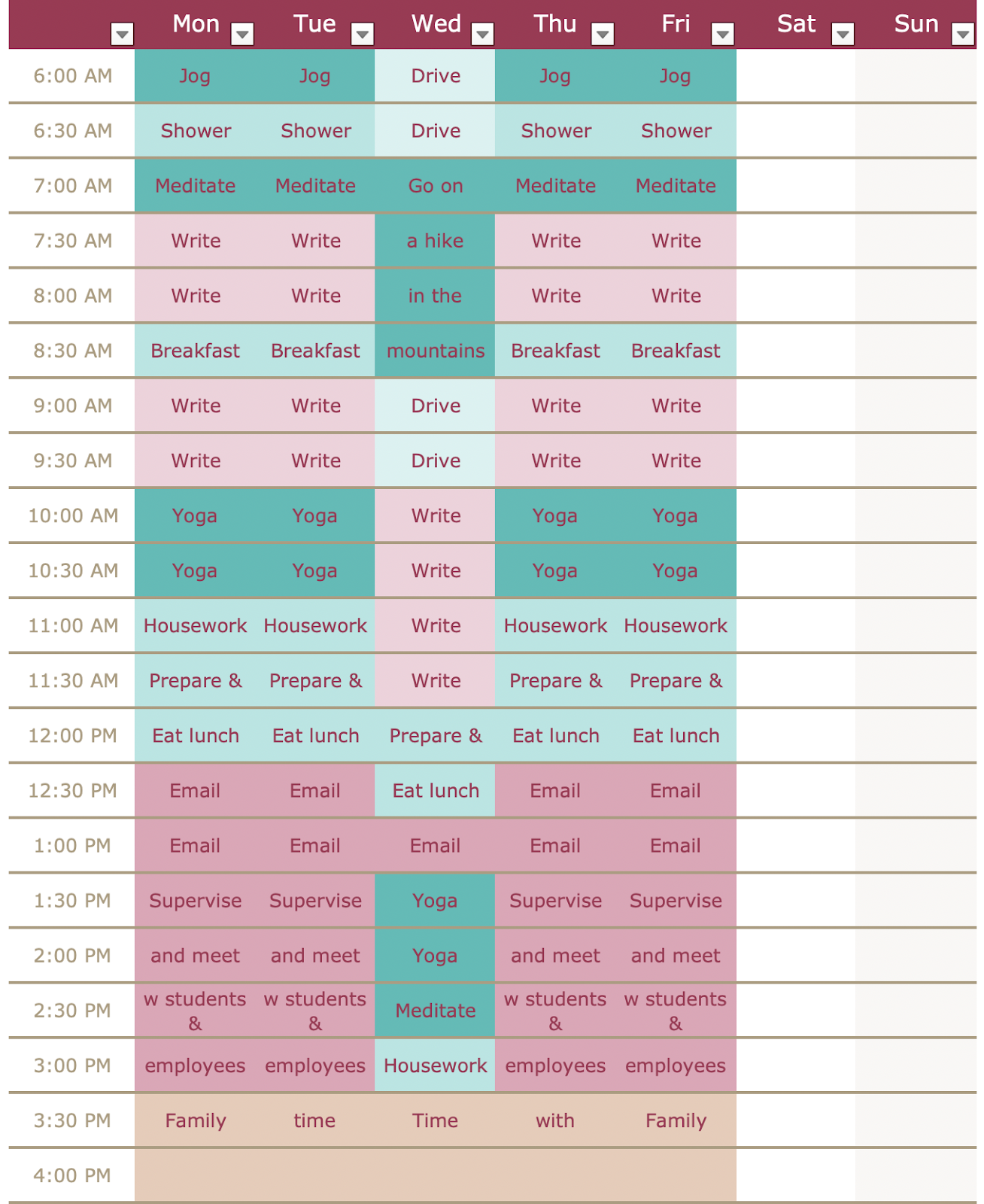
My Summer 2020 weekly template

Unfortunately, I won’t be able to just write for two hours and call it a day because I have lots of other work to do that is not deep work. Thus, I plan to set aside another two to three hours each weekday to manage the dozen or so employees I have working for me, to respond to emails, and to plan out and troubleshoot my ongoing research.

I also know that exercise and self-care will be very important so I have set aside time in my schedule for those activities.

I show you my summer plan here and will walk you through the logic behind my decisions. I wake up very early. I am an early riser, so this is not difficult for me. Also, as I mentioned above, it gets very hot here in Merced, California. However, the early morning hours are cooler and this is the time I would be able to get in a jog. Thus, I plan to jog for 30 minutes four days a week, first thing in the morning.


I also will meditate just before writing as I find that meditating greatly improves my focus and helps me get into the mindset of doing deep work.

Sitting for two hours is not the best thing for my back, so I will do yoga after meditating to stretch out those kinks. Then, I will take a break to have lunch and do some housework. Then, I will spend 2 to 3 hours taking care of email and meeting with my students and employees before dedicating the rest of the day to hang out with my partner and our three teenage daughters.

And, one day a week I will break up this routine and go on a long morning hike. I chose the morning time because this is the only time it will be cool enough for a long hike.

You will notice that I also set aside time for email and housework. The logic behind doing that is that, knowing that I have those activities on my calendar will make it easier for me to not get lost in email when I should be writing or decide that I really need to dust the ceiling fans during times I have set aside for writing.

How about you? Have you come up with a weekly template for your summer? Will you be able to set up an hour or two of distraction-free time for yourself?

Thursday, January 2, 2020

Don’t Check Your Email in the Morning


Woman in White T-shirt Holding Smartphone in Front of Laptop

You likely have heard this advice before. You may have even followed it for some time. You may have even read the book: Never Check Email in the Morning. But, if you’re anything like me, you tried avoiding email in the morning, and it worked for a while before you slipped back into your old habits.

We tell ourselves all kinds of stories for why we have to check email in the morning. Here are a few things I tell myself:

  • It’s efficient to check and delete emails from my phone while drinking my morning coffee.
  • It’s important to know what’s coming for the day.
  • There may be something urgent I need to respond to.
  • I can quickly scan my emails and then move on to other tasks.


Despite what I may tell myself, I am not that important. Nothing will happen if I don’t check my email all morning. And, although it may seem efficient to scan my email in the morning, it is not.

I recently read this great book by Cal Newport called Deep Work. In that book, he describes research which reveals it is harder to focus after checking email or social media. He explains that any activity you do affects your level of focus in the next activity you engage in. Thus, even if you take five minutes to scan your email or scroll through Twitter, that experience will leave a residue. The “attention residue” from email or social media is detrimental to your ability to focus on the next task. Email and social media are particularly detrimental to activities that require a high level of focus such as writing.


You will be able to achieve a higher level of focus and clarity in your writing if you get your writing done before checking your email and social media accounts.

I am Department Chair this year and I have to respond to lots of emails in that and other administrative capacities. During the Fall semester, I was able to handle those responsibilities while also getting my writing done in September and October. In November, however, I added three out-of-town trips to my already packed schedule and my writing fell by the wayside. Looking back, one of the main reasons I got so little writing done in November is that I began my days responding to emails. Once I opened my emails, it was difficult to achieve the focus I needed to make progress on my writing.

When I couldn’t focus on my writing, I turned to social media, which was a further distraction from my writing.

Thus, in the coming Spring semester, I am going to avoid email and all social media until I complete my writing tasks for the day. Then, I will limit both activities to specific times of the day.

My plan is to wake up at 6am, write for one hour, take my daughter to school, go for a run, have breakfast, and then sit down for my second writing session. Once my second session is over, I will check my emails. I then will close my email and check it again at the end of the day. At 5pm, I will log out of my email and close the program until the next day. In Deep Work, Cal Newport also recommends having an official end to the workday to allow the mind time to reset and refocus.

I also set up my phone so that I am limited to a total of 30 minutes per day on social media. I will only engage with social media once I have finished my writing and will avoid social media after dinner. This will allow me more time to spend focusing on my family as well as reading great books.

It should not be difficult for me to keep this routine during the month of January, as my semester does not officially start until January 14th and classes don’t begin until January 21st. Thus, no one expects a quick response from me during this time. My hope is that I will be emboldened and inspired by my writing productivity during the month of January and that I will thus keep this up for the rest of the semester.

How about you? What will it take for you to get your email and social media habits under control?

Thursday, October 25, 2018

Why Daily Writing Leads to Productivity

I began developing my daily writing habit in December 2006 – over ten years ago! Since then, I have written almost every weekday, except for vacations, of course. And, I have written a ton. I also have published a lot.

In 2006, when I began to write daily, I had two published articles and a dissertation. Today, I have published five sole-authored books, over 50 articles and book chapters, and dozens of blog posts, online essays, and OpEds.

A few years ago, I wrote a post about how to write every day.

This post is about why daily writing works.


I have writing on my calendar every morning. I write for two hours a day most days, and I get in a minimum of 30 minutes of writing on days when my schedule is packed with teaching and/or meetings. I thus write for a minimum of 30 minutes and a maximum of two hours every weekday.

At the beginning of the week, I decide what writing tasks I will work on, and which days I will focus on which tasks. Sometimes, I have no pressing deadlines. This means I have to think ahead to figure out which writing tasks I should focus on.

For example, I have an article due November 15. But, my co-author is working on it. I need to wait to hear back from her before I can work on it again. I also have been working on a grant proposal due in January. But, I don’t want to work on it now because I sent a draft to two readers. I am waiting to hear back from them before I get back to revising it. This means I don’t have anything to work on right now that has a deadline in the next couple of months.

I thus am writing today only because it is a habit – not because I have an upcoming deadline.

On Sunday evening, I pulled out my task list for the year to see what I can work on.

I have three pieces due at the end of February 2019. For two of them, I have to wait for co-authors to do their part before I can move forward. But, there is one of them that I can work on. I thus am likely to finish that piece way ahead of schedule. And, that is great because I have two other pieces also due in late February.

I think this is one of the main reasons daily writing leads to high productivity. If you set aside time to write, you will write regardless of whether or not you have an impending deadline. And, if you wait until you have a deadline to write, you might find that your deadlines are stacked together, making it difficult for you to meet them.

My preference is to write daily, but the most important thing is that writing becomes a habit. If you set aside two days a week to write and write on those days no matter what, I suspect you would find the same thing – that you write because it’s on your schedule, not because you have a deadline.

What about you? Have you developed a writing habit? Have you ever found yourself writing even though you don’t have an impending deadline?

Tuesday, February 13, 2018

Getting the Most out of Academic Travel: The Ideal Work Trip

I have been traveling a lot for work lately, which is great, but it also means I need to make decisions about which invitations to accept, as well as what to ask of my hosts to make travel more feasible and enjoyable. Jet-setting around the world can be fun, but also exhausting.

Several years ago, I wrote a blog post about my "ideal day," inspired by Barbara Sher's book, Wishcraft. I think of this exercise often, although my ideal day has shifted a bit since 2011, as I have gained clarity on what I want and need, and what makes me happy.

During a recent work trip, I realized I could use the "ideal day" exercise to think through what my ideal work trip would look like. What kind of work trip would I look forward to?

Envisioning what an ideal work trip would look like allows me to try and arrange my visits to reflect that - and to actually enjoy traveling for work.

Here is what I came up with for my ideal work trip:
Photo from a recent work trip to Costa Rica!

Tuesday evening:
Pack for my trip so that my travel bag is ready to go.

Wednesday morning:
6:00am: Wake up at home and write for an hour
7:00am: Go outside for a jog.
7:40am: Have breakfast with my family before they leave for the day.
8:00am: Shower, get ready.
8:30am: Write for another hour.
10:00am: Leave the house for my work trip
… travel to my destination ….
6:00pm: Have an engaging dinner with hosts
8:00pm: Back at hotel, relaxing with a novel

Thursday morning:
6:00am: Wake up and write for an hour
7:00am: Go outside for a jog or to hotel gym if weather is not suitable
7:40am: Have breakfast.
8:00am: Shower, get ready for the day.
8:30am: Write for another hour.
10:00am: Leave the hotel for a day of engagement with hosts and other guests
… this day can include meals, talks, meetings, and downtime …
8:00pm: Back at hotel, relaxing

Friday morning:
6:00am: Wake up and write for an hour
7:00am: Breakfast
7:30am: Shower, get ready.
8:00am: Write for another hour
9:00am: Leave the hotel to do something enjoyable - preferably a long nature hike. If I'm in a city, visit a museum or something I can only do in that location.
12:00pm: travel back home
….
6:00pm: Back home with my family

My ideal workday at home involves waking up early, exercising, and getting a couple of hours of writing in. My ideal work travel visit also involves having some alone time in the morning when I am writing and not skipping out on my exercise routine. If I can travel and keep my writing routine going, I feel better about my projects. If I can travel and find time to exercise, I feel better all around.

I enjoy engaging with others. But, I have also realized that one full day of engagement with people is plenty for me. So, I can request that my meetings be limited to one day. I enjoy having meals with people and trying new food, so I also try and arrange my travel such that I can make it in time to have dinner the night before.

When I travel, I also enjoy doing at least one activity that I can only do in that place. During a recent trip to Oregon, I went on a hike up a butte, for example. And, when I went to Costa Rica, I was able to visit a volcano!

I travel a lot for work, and often miss my family when I do. It thus works better for me to travel during the week so that I am home on the weekends and can spend time with my partner and three kids.

Now that I have a sense of my ideal work trip, I can aim to mold my future trips to emulate this as much as possible.

Of course, I am dependent on airline schedules, conference schedules, and my hosts' needs and location. However, knowing what I want makes it easier for me to make decisions about which invitations to accept, as well as when to schedule my flights.

For example, I have an upcoming trip to give a public lecture on a Thursday evening. I am unable to leave on Wednesday for that trip so I will have to leave early in the morning on Thursday. I have a three-hour flight, so hopefully will be able to get at least an hour worth of writing done on the plane. I have asked my host to schedule all of my meetings on Thursday so that I have Friday to myself. I will wake up on Friday, write for a couple of hours, and then find a great place to hike and have lunch before getting on a plane back to California.

Now, I am looking forward to that trip and especially to finding a cool place to hike!

What about you? How are you handling work travel these days? What does your ideal work trip look like?

Friday, September 23, 2016

How to be a prolific academic writer

I often hear academics worry they are not putting enough time into writing. But, how much is enough? For me, two hours of writing every weekday is more than enough time to be extremely productive.

For the past ten years, I have written for two hours a day, five days a week, and taken at least four weeks of vacation every year. With that schedule, I have written more than many scholars will write in their entire careers.

Writers writing #ccretreat14
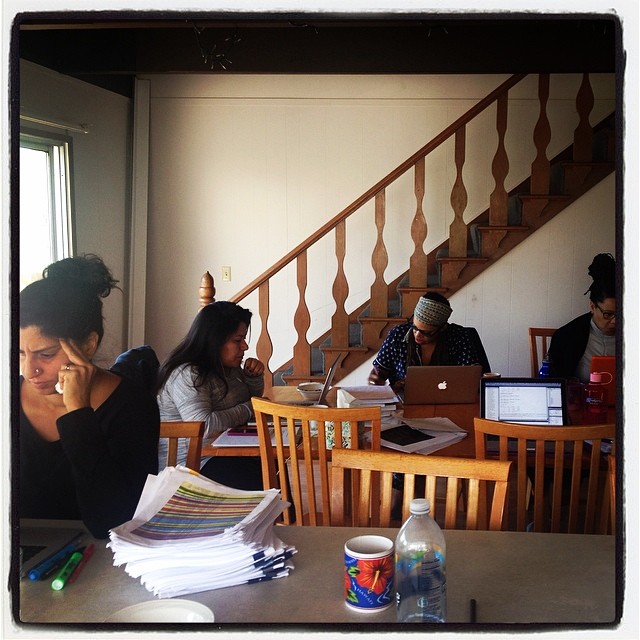
Writers writing for two hours a day at the Creative Connections Retreat

I am telling you this not to brag, but to make the case that two hours of writing can be more than enough. Of course, this does not mean that I write for two hours and then sit around and eat cherries for the rest of the day. In contrast, I write for two hours, and then spend the remainder of the workday responding to the 50+ emails I get on a daily basis, attending meetings, reading, preparing class, teaching, and doing many of the other tasks required of academics. Each day, I carve at least two hours out of my day to write. (In case you are wondering what I mean by "write," here is a list of ten ways to write every day.)

These two hours a day have been more than enough for me. I began daily writing nearly ten years ago, in January of 2007. Ever since I began, I have endeavored to write for about two hours each day. I rarely write for less than one hour and almost never write for more than three hours, even during summer or when I am on research leave. With this consistency, I have written a lot over the past ten years.

What have I done in 10 years?

I have written, revised, and published 12 peer-reviewed journal articles.
I have four articles that were published between 2005 and 2008. I would not count those as part of this tally, as two of them were accepted prior to I began daily writing. The other two had been written, but required some revising. We can definitely count the other 12 articles I have published since 2009 as I began writing those from scratch after 2007.

I have written, revised, and published 15 book chapters and invited articles.
As for my book chapters, I will not count the four book chapters I published in 2008 or earlier, as those had already been at least partially drafted by the time I began daily writing. I have written and published 15 book chapters and invited articles since 2007.

I have written, revised, and published 4 books.
I have published five books. My first book, Yo Soy Negro: Blackness in Peru, is based on my dissertation, which I defended in 2005. I had already begun the revisions by 2007 but certainly spent a lot of time between 2007 and 2010 revising and re-revising it until I finally sent off the final version in February 2010. I wrote my other four books from scratch since 2007.

I have written and published lots and lots of blog posts and online essays.
I have also published 74 OpEds and online essays in addition to about 150 blog posts.

So, what can you accomplish by writing for two hours a day, five days a week? In my case, it looks like in ten years, you can write four books, 15 book chapters and essays, and 12 articles. A normal tenure review is about half that time – five years. And, half of what I have accomplished in these past ten years would exceed the bar for tenure in most places. Finally, this is a conservative estimate as I am not counting the three articles and two book chapters I have under review nor the edited volume that is nearing completion.

A lot has happened in these ten years. I moved to Chicago for a one-year post-doctoral fellowship. I spent a year traveling to four countries to do research for my book, Deported. I moved to Merced to start a position at UC-Merced. Each of these moves derailed my writing patterns temporarily. But, the important thing is that I have always eventually been able to get back on track and find my writing mojo.

In sum, carving 30 minutes, an hour, or two hours out of your schedule every day for writing is a great way to achieve tremendous productivity. Instead of feeling as if you have to write all day every day, I encourage you to write a little bit every day and see what you can accomplish.

Thursday, February 4, 2016

Writing a Literature Review: Six Steps to Get You from Start to Finish

As Get a Life, PhD is approaching two million (!!) page views, I am pulling out some of the "Greatest hits" from the archive. The post below is the most read post of all time on this blog, with over 125,000 views. I often share this post with my students as they embark on their first literature reviews. And, we read Foss and Walters' book every year in my graduate Writing and Publishing class.


Writing a literature review is often the most daunting part of writing an article, book, thesis, or dissertation. "The literature" seems (and often is) massive. I have found it helpful to be as systematic as possible in doing this gargantuan task. This post describes one system for writing a literature review.

In their book, Destination Dissertation: A Traveler's Guide to a Done Dissertation, Sonja Foss and William Walters describe a highly efficient way of writing a literature review. I think it provides an excellent guide for getting through the massive amounts of literature for any purpose: in a doctorate program, for writing an M.A. thesis, or an article in any field of study.
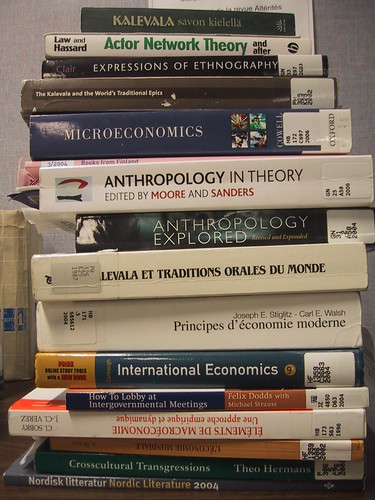

Academic Book Stack


Step One: Decide on your areas of research

Before you begin to search for articles or books, decide beforehand what areas you are going to research. Make sure that you only get articles and books in those areas, even if you come across fascinating books in other areas.

Step Two: Search for the literature:

Conduct a comprehensive bibliographic search of books and articles in your area. Read the abstracts online and download and/or print those articles that pertain to your area of research. Find books in the library that are relevant and check them out. Set a specific time frame for how long you will search. It should not take more than two or three dedicated time sessions.

Step Three: Find relevant excerpts in your books and articles:

Skim the contents of each book and article and look specifically for these five things:

  1. Claims, conclusions, and findings about the constructs you are investigating
  2. Definitions of terms
  3. Calls for follow-up studies relevant to your project
  4. Gaps you notice in the literature
  5. Disagreement about the constructs you are investigating


When you find any of these five things, type the relevant excerpt directly into a Word document. Don’t summarize, as summarizing takes longer than simply typing the excerpt. Make sure to note the name of the author and the page number following each excerpt. Do this for each article and book that you have in your stack of literature. When you are done, print out your excerpts.

Step Four: Code the literature

Get out a pair of scissors and cut each excerpt out. Now, sort the pieces of paper into similar topics. Figure out what the main themes. Place each excerpt into a themed pile. Make sure each note goes into a pile. If there are excerpts that you can’t figure out where they belong, separate those and go over them again at the end to see if you need new categories. When you finish, place each stack of notes into an envelope labeled with the name of the theme.

Step Five: Create Your Conceptual Schema

Type, in large font, the name of each of your coded themes. Print this out, and cut the titles into individual slips of paper. Take the slips of paper to a table or large workspace and figure out the best way to organize them. Are there ideas that go together or that are in dialogue with each other? Are there ideas that contradict each other? Move around the slips of paper until you come up with a way of organizing the codes that makes sense. Write the conceptual schema down before you forget or someone cleans up your slips of paper!

Step Six: Begin to Write Your Literature Review

Choose any section of your conceptual schema to begin with. You can begin anywhere, because you already know the order. Find the envelope with the excerpts in them and lay them on the table in front of you. Figure out a mini-conceptual schema based on that theme by grouping together those excerpts that say the same thing. Use that mini-conceptual schema to write up your literature review based on the excerpts that you have in front of you. Don’t forget to include the citations as you write, so as not to lose track of who said what. Repeat this for each section of your literature review.

Once you complete these six steps, you will have a complete draft of your literature review. The great thing about this process is that it breaks down into manageable steps something that seems enormous: writing a literature review.

I think that Foss and Walter’s system for writing the literature review really can work for a dissertation, because a Ph.D. candidate has already read widely in his or her field through graduate seminars and comprehensive exams.

It may be more challenging for M.A. students, unless you are already familiar with the literature. It is always hard to figure out how much you need to read for deep meaning, and how much you just need to know what others have said. That balance will depend on how much you already know.

For faculty writing literature reviews for articles or books, this system also could work, especially when you are writing in a field with which you are already familiar. The mere fact of having a system can make the literature review seem much less daunting, so I recommend this system for anyone who feels overwhelmed by the prospect of writing a literature review.

PS: A spot has just opened up in the Creative Connections Retreat. Apply soon if you are interested.

Monday, October 12, 2015

How to Develop a Daily Meditation Practice

If you want to become more creative, focused, and productive, meditation can be a great tool. Meditation will help you with focus, which will make you a more efficient writer. It will also help you to quiet your mind, which can help you access your creative potential.

There are many benefits to meditation, and no downsides I can think of, so I highly recommend you try it. This article, for example, tells us that meditation can make you happier, strengthen your brain, improve your focus, relieve stress, and make you more compassionate. And, this website says meditation helps with creativity, focus, and stress-reduction. For this reason, I incorporate meditation into every Creative Connections Retreat.

time to meditate

During the Creative Connections Retreat, we meditate together for ten to fifteen minutes each morning, just before writing. I love doing this, as it sets the intention for the day and allows us to check in with our mental state before we begin our writing.

When I get back home from the retreat, however, I often struggle with maintaining a daily meditation practice. One reason for this is that I am rarely in the house alone, and it is hard to find a good time to meditate when I won’t be interrupted. The main reason, nonetheless, is that I never made meditation a priority and thus never really figured out how to make it happen.

However, for the last two months, I have finally been able to maintain my daily meditation practice.

I think there are three reasons for this:
  1. My daughter expressed interest in meditating and we have been doing it together;
  2. I found an app I really like; and
  3. I started small, with just ten minutes a day.
Meditating alongside my 11-year-old daughter has been fantastic. Just like writing, there is the accountability factor. We agreed to meditate each evening at 8pm, and if I forget, she reminds me, and vice-versa. Also, it is much easier for me to say to everyone else in the household: “We are going to meditate for 10 minutes” than “I am going to meditate alone.” I am sure they would leave me alone anyway, but I feel more comfortable making this request on behalf of both of us. Finally, I meditate not just because it is good for me but because I know it is good for my daughter as well. So, if you have been thinking about meditating but have not yet made it a daily practice, think about getting someone else in your house to do it with you.

The other factor that has made meditating become more of a habit for me is the headspace app. Some people like Zen meditation, which is silent, but I prefer guided meditation, where someone tells you what to do. I have been using headspace, an app that comes in a sequence, and each meditation gets a little harder, a little less guided, and focuses on different aspects of meditation. I like the fact that it seems to progress in a logical fashion. The app also gives you stats, telling you how many days in a row you have meditated, what your average meditation time is, and your total time meditating. I find these numbers motivating. There are many free apps on the Internet, and I encourage you to find one that works for you. There are also YouTube videos and audio recordings that could work for you.

The final factor is starting small. There is a fantastic free online course on Mindfulness Based Stress Reduction (MBSR). I have started the course several times but never finished, in part because it requires a significant amount of time. I highly recommend you try this research-based, free course to get started with meditation. However, if you have trouble completing the course, I also recommend you try something a bit less intensive to start with.

I look forward to hearing how and why you incorporate meditation and mindfulness into your life.

If you would like to receive these posts in your inbox, you can Subscribe to Get a Life, PhD by Email.

Sunday, October 4, 2015

How to Develop a Daily Writing Habit

You have seen research that confirms that writing every day is the best way to become a productive academic. And, you want to be a productive academic, right? But, are you writing every day? Do you want to learn how to write every day? If so, this post is for you.

The basic trick to writing every day is to develop a writing habit. New habits take a long time to form. However, if you make yourself write every day, eventually it will become a habit. Once writing is a habit, it will become second nature to get up and write every day.

Developing this habit requires writing consistently. How do you do that?

Emma Reh (1896-1982)

During the Creative Connections Writing and Meditation Retreat, everyone writes for two and a half hours each morning together. Although the writing session starts early, everyone participates for several reasons. First of all, we are on a writing retreat, so everyone knows that writing is expected of them. Secondly, we write because everyone else is writing so that creates a bit of peer pressure. Thirdly, we write because we know we will have to share our work during the retreat, thus giving us an important deadline to meet.

You don’t have to be at a retreat, however, to incorporate these strategies into your life. Here are a few suggestions to get you on track to making writing a daily habit.
  • Write at the same time every day. If you have your pick of times, choose the early morning. When you do something at the same time every day, you are more likely to form a habit. If you do it in the morning, you are less likely to let everything else you need to do get in the way.
  • Treat your writing as you would any other appointment. Make an appointment with yourself every day to write. Show up to your appointment with yourself and decline any other invitations to do other things during that time.
  • Incorporate some accountability. This can be to yourself, where you keep track of your writing on a spreadsheet. But, it is better if you are accountable to someone else, as a bit of peer pressure goes a long way.
  • Write towards deadlines. If you don’t have any external deadlines, set deadlines for yourself. Aim to get your article finished by the end of the month. Or, set a deadline for a draft of each book chapter you are writing.
  • Develop an expectation for yourself that you will write every day. If you want to become a writer, if you want to publish, if you want to finish your dissertation, you have to write. So, expect yourself to write.
I hope these strategies help you become a daily writer if you are not already. Let me know of any challenges you face to becoming a daily writer in the comments section. Also, let me know what strategies are working for you.

Thursday, June 4, 2015

Summer Hours: Enjoy your summer and be productive too!

We all know that it is a myth that tenure-track and tenured faculty do not work at all during the summer. However, it does not have to be a myth that we work less in the summertime.
I know some of my colleagues take pride in bragging about how much they work during the summer – probably to push back against the myth that we don’t work at all. However, I neither brag about overwork nor do I actually work that much during the summer.

Summertime should look like this!
Scaling back on work hours is one of the great privileges of having a tenure-track or tenured position, or even a lecturer position that pays enough during the year to be able to avoid teaching during the summers. Of course, if you are in a position where you have to work as a lifeguard during the summer to make ends meet, this post won’t apply to you. However, there are many faculty members and even graduate students whose summers are taken up by research and writing. If that describes you, then this post will help you to think about how to have a productive summer by working only four hours a day.
My summers always involve a two-week vacation where I do no work at all and recharge my batteries. This year I will do that while camping in the Pacific Northwest. During the rest of the summer, I try my best to stick to summer hours – which, for me, means only working before lunch. I have stuck to that routine most summers for the past decade, and have been quite productive.
The summer begins for me, as it did last year, with a writing and meditation retreat in Yosemite.
Last summer, my husband spent six weeks in Peru, and I stayed in Merced for the first half of the summer with our three kids. During that time, I finished and submitted an article, wrote and submitted a book chapter, submitted a major grant, developed drafts of two articles, and finalized two syllabi for my fall courses. I did all of this working just in the mornings.
I met my goals by sitting down and working on my writing projects every weekday for about two hours. During this time, I turned off email and social media, and told my kids to leave me alone. Since it’s only for two hours, and often before they even wake up, they were happy to oblige. Once I finished with writing, I had to take care of emails and other work-related tasks. Before lunch, I closed my laptop and called it a day.
With this routine, the rest of the day is mine to enjoy and to take care of myself, my family, and my house. I go to the gym most days – a unique summertime luxury. I cook most of my meals at home. I clean the house. I watch television with my kids. I grocery shop and drop the kids off at their various activities. I read novels. I go swimming. I listen to podcasts. Basically, I do whatever I want to do in the afternoons – which I dedicate to rejuvenation and renewal.
If you dedicate your mornings to writing, and resolve not to work after lunch, this allows you to be productive in the morning, and to feel as if you are having a real break each afternoon. Spend your afternoons taking care of yourself and your family – taking your kids to the pool, hanging out with your friends on patios and in backyards, going to the gym, taking long bike rides, reading books, and checking out that yoga class. If you are lucky enough to live somewhere where there are summer festivals, take advantage of them.
If your children are too small to leave you alone for two hours in the morning, arrange some activity for them and use that time to write. You can sign them up for camp or drop them off with a nanny. I enjoy having the summers to spend more time with my kids – but that doesn’t mean I need to spend every single minute with them.
In addition to taking your afternoons off, plan to take at least two weeks of full-on vacation. Your mind and body need to recharge. Taking a vacation is the only way to feel as if you have had a break from the normal stresses of life and work. If you can’t make leaving town happen, you can have a staycation by spending your time reading novels, taking long walks, watching your favorite television shows, getting a haircut, or even making those long overdue visits to the doctor and the dentist.
It might sound crazy to you to take it easy during the summer, but the best way to be productive and sane during the year is to use the summer months to rejuvenate. There is a good reason why countries in the European Union all have a minimum of four weeks vacation for workers. Intellectual work is hard and we need to rejuvenate in order to be consistently productive.
If you also are fortunate enough to be free from teaching and administrative responsibilities during the summer months, you can dedicate these months to research and writing; spending time with loved ones; and rejuvenation. Each of these is equally important.
If none of this is possible for you because you are spending the summer teaching or doing paid administrative work, then it may be time to ask yourself if there is any way you can make ends meet next year without relying on the extra summer salary. Of course, this is not possible for many people, but it’s worth thinking about the balance between short-term financial gain and long-term physical, mental, and emotional health.
Summers are one of the best things about being an academic and I hope you find a way to enjoy yours.

Wednesday, December 17, 2014

Daily Writing: How Prolific Scholars Do It

I am most productive as a writer on days when I wake up before the crack of dawn and get an hour of writing in before everyone in the house is awake and and, most important, before checking email or social media. I know several highly productive academics – some of them chairs, deans, and provosts – who do the same thing. For people with administrative duties, that is often the only time they have to write.


You don’t have to wake up at 5 a.m. to be a prolific scholar. You do have to write however. And nearly all of the prolific academics I have met are daily writers. Daily writing is one of the most important strategies I can recommend to boost your productivity. Theresa MacPhail calls daily writing a “no-fail secret to writing a dissertation.” That advice is just as crucial for new (and older) faculty.


It’s also backed up by research.


A study by Robert Boice, reported in his book, Professors as Writers: A Self-Help Guide to Productive Writing as well as in this article, provides concrete evidence that daily writing produces both more writing and more ideas. Boice conducted an experiment with 27 faculty members who wanted to improve their productivity. He divided them into three groups and examined their writing progress for 10 weeks.


Boice instructed Group No. 1 – the abstinent writersnot to schedule any writing sessions but to write only if they felt compelled to. He also asked them to keep a log of creative ideas to write about. The thought behind planned abstinence was that these writers would have a list of creative ideas ready when they finally did feel like writing. Result: The abstinent writers produced an average of 0.2 pages a day and had one creative idea a week.


Boice told Group No. 2 – the spontaneous writers – to schedule writing sessions five days a week for 10 weeks, but encouraged them to write in those sessions only when they were in the mood. They also were asked to use part of the scheduled writing time each day to come up with a new idea to write about. Result: The spontaneous writers produced an average of 0.9 pages a day and one creative idea a week.


Group No. 3 – the forced writers – agreed to a strict accountability plan. They scheduled five writing sessions a week for 10 weeks, and kept a log of creative ideas to write about. To ensure they would write every day, whether or not they felt like it, the members of this group each gave Boice a prepaid check for $25, made out to an organization they despised. If they failed to write in any of their planned sessions, Boice would mail the check. Result: The forced writers produced an average of 3.2 pages a day and one creative idea each day.
I first heard about this study in 2006 from Kerry Ann Rockquemore. When I saw the results, I was convinced I wanted to be in Group No. 3. I have been a daily writer ever since, and recently submitted my fifth book manuscript for publication.


If you are not a daily writer, but are producing as much writing as you think you should, then there is no reason to change your habits. However, if you are unhappy with your productivity and would like to write more, my experience as well as the research show that daily writing is very likely to work for you. Here’s how.


Pull out your calendar and schedule writing sessions five or six days a week. Writing experts Patricia Goodson and Wendy Belcher both recommend that you start with 15 minutes a day if you have never tried daily writing before, or if you are overwhelmed with other tasks. Patricia Goodson recommends that you start with 15 minutes and increase your writing time by one minute each day until you reach your desired level.


If you are not sure what counts as daily writing, check out this list of 10 ways to write every day.

Nearly all writing experts agree that you should not schedule more than four hours for a writing session. My colleague Anthony Ocampo says that if you push yourself too far, you might get a “writing hangover.” If you have one day that you can dedicate to a long stretch of time for writing, you may want to schedule four hours for that day. On your busiest days, set aside at least 15 minutes – even if it means waking up 15 minutes earlier in the morning.


Once a writing session is on your calendar, treat it like any other appointment. By that I mean show up for it and schedule your other obligations around it. If you have scheduled a writing session from 10:30 to 11 a.m., and a student emails to ask if she can come by at 10:30, tell her you already have an appointment at that time and to come instead at 11 a.m. It might seem odd at first to be making appointments with yourself, but, over time, you will get used to it. In fact the busier you are, the more crucial it is it schedule your writing time and stick to it.

Once you start writing every day, it becomes a habit. I will admit there are days I don’t get my writing done, but I notice it when I don’t. I notice it so much that I make sure to write the next day.

My preference is to write every morning from Monday to Friday for at least an hour, but usually for two. What about you? Are you already a daily writer? How long have you been at it, and has it made a difference in your productivity?

Re-posted from: https://chroniclevitae.com/news/836-the-trick-to-being-a-prolific-scholar

Saturday, April 5, 2014

How to meet your financial, fitness, and writing goals: Five strategies that work

Have you ever lost weight, saved money for an important purchase, or met a writing deadline?

If you have ever met any fitness, financial, or writing goals, there is a good chance that you have developed skills that will allow you to meet other goals.


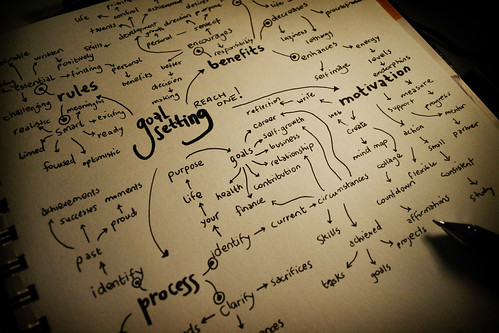
Goal Setting

The strategies for meeting very different kinds of goals are surprisingly similar. In this post, I will focus on these three areas – as these are some of the most common goals that people have.

If you have never set or met any goals, then this post might also be helpful for you to decide if goal-setting is an appropriate strategy for you.

So, what do money, fitness, and writing have in common?

1. Set reasonable goals.

With saving money, it will be hard to meet your goals if you try and save half your income. Likewise, losing five pounds a week is setting yourself up for failure, as is trying to write 3,000 words a day. Instead, set reasonable, achievable goals. These goals will vary by individual, but it is important to set goals that are both reasonable and achievable. Here are some examples of reasonable goals.

Writing: Write for 30 minutes Monday to Friday. Write 300 words a day. Take notes on one article or book chapter a day.

Fitness: Walk or bike to work once a week. Go to the gym three times a week. Avoid meat on Fridays. Avoid sugar on Tuesdays. Lose one pound a week.

Money: Only buy fancy coffee once a week. Put 10 percent of earnings in a savings account. Use 10 percent of earnings to pay off debt. Cancel cable television. Eat out only once a week.

2. Keep track of your activities.

Knowledge really is power here.

If you really want to take control of your finances, one of the best things you can do is to track every penny you spend. If you are not ready to do that, however, you can at least make a budget and track spending in certain areas. Mint provides a free tool for you to do that. For example, if you set a budget of $100 a month for eating out, it will tell you when you’ve reached that limit, and you can eat in for the rest of the month.

The same goals for your fitness goals – keeping track can do wonders for you. There is a free app called My Fitness Pal which allows you to track everything you eat and even add your exercise so that you can keep track of calorie intake and expenditure. This application works, but requires a high level of commitment. However, even writing down the food you eat once a week or writing down the exercise you do daily can help you meet your fitness goals. I haven’t tried them yet, but many people recommend the FitBit - which tracks your activity.

For writing goals, there are also different levels. Some people find it useful to write down the number of new words they write each day. Others keep track of the hours they spend writing. If you want to go all the way with time management, it can be incredibly revelatory to track your time for a full week. In this article, Kerry Ann Rockquemore draws parallels between tracking your money and your time.

3. Get a buddy involved.

Getting friends involved can help you achieve these goals. There are many ways to do this, from joining support groups to simply asking a friend to check in on you daily or weekly. There are online forums you can join, or you can make your own. Many of us are uncomfortable sharing personal information with others, but , if you can find a trusted person who will keep you accountable, it can do wonders for meeting your goals.

4. Celebrate your achievements.

It is crucial to not only set goals, but also to reward yourself when you achieve them. Depending on your personality and your goals, you can either give yourself a small daily reward or promise yourself a larger reward at the end of the week, month, or year.

It can be hard to think of rewards, so I will offer a few productive examples.

  • At the end of each week, if you meet your writing goals, catch up on one of your favorite TV shows.
  • At the end of the day, if you meet your fitness goals, call one of your friends and catch up.
  • At the end of the month, if you meet your financial goals, allow yourself a small splurge such as downloading a movie or getting a fancy coffee.

5. Make your goals a priority

It would be very difficult to make fitness, money, and writing goals your priority at the same time. For this reason, I would suggest thinking about one area of your life and deciding where you want your priorities to be. In what area are you most committed to change?

I have made different areas of my life priorities at different times. Prior to going to graduate school, my priority was to travel the world, learn new languages, and have a great time. To meet my goal of traveling the world, I worked as a waitress, and saved nearly all of my tips.

Once I began graduate school, as a new mother of twins in a very low-income household, I had to track every penny we spent to make sure we could pay rent at the end of each month. My financial goals were to avoid getting into debt, and I made that a priority.

When I was lucky enough to secure a tenure track job at a research university, I made writing my top priority, as I was sure I wanted to be in academia, and I wanted to build a solid case for tenure.

Now that I have tenure, I continue to write. It still is a priority, but writing has become such a habit that I no longer need all of the mechanisms I once had in place to make sure that I made progress on my writing projects. This has allowed me to focus on other areas of my life. With three children headed for college, I have to think about saving for their education – thus bringing me back to examining my finances. As I just turned 40, I have also realized that my body is not getting any younger, and it is important for me to pay attention to my fitness.

Over the past month, I have recommitted to my fitness goals. It was actually through this process that I saw the parallels and was inspired to write this post.

Finally, I know it has been a while since I have posted here. One of the reasons for this is that I have been focused more on writing opinion pieces. I also have just finished writing a textbook called Race and Racisms that has taken up quite a bit of my time. You can check out the website for that here.

I am grateful to all the readers of this blog and hope to post here more often.