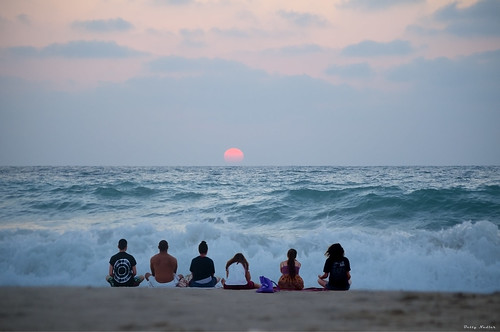
This will be the first summer in over two decades that I will stay put. When I moved to Merced, I knew the summers were very long and very hot. But, I also thought that I would be able to leave for at least a month each summer to escape the heat. Clearly, that won’t be happening this summer.
I am particularly disappointed about having to postpone our writing retreat which was going to be on a private island in Belize, but, this is our new reality and I have accepted that.
With three long, hot months ahead of me, I know I need to plan to make sure that I emerge from the summer feeling relaxed and rejuvenated and ready to take on whatever the fall semester may bring.
I also have work to do as I have grant-funded research that needs to happen this summer.
Fortunately, I know from both research and experience that it is possible to have a summer that is both productive and relaxing. Today, I will share some strategies with you that will also help you to have a productive and relaxing summer.
This will require using small chunks of focused time for deep work. Cal Newport, a computer science professor at Georgetown University, defines “deep work” as “professional activities performed in a state of distraction-free concentration that push your cognitive capacities to their limit.”
Newport argues we have to work in distraction-free environments to reach the limits of our cognitive capacity.
The work we do as academic writers requires tremendous cognitive capacity. To publish our research, we have to create new knowledge. That requires first understanding at a very deep level the current state of the field and then having the creativity and ingenuity to create new knowledge. The work we do is not mundane. We are creating new knowledge and this requires deep work.
There are some knowledge-creators who have the luxury of going to lakeside retreats by themselves for weeks or months at a time where they can achieve a state of flow and concentration that allows them to make important breakthroughs. If you are a single person who lives alone, you may wish to try out a monastic strategy where you cut yourself off from the world completely for a week to focus on your research and writing. However, I know that is not possible for most of us. And, fortunately, there are other ways to achieve this state of distraction-free concentration.
My strategy is to carve out two hours each morning to focus on deep work. I know from over a decade of experience that focused work for two hours every day is all I need to achieve very high levels of productivity. I have been keeping track of the time I spend writing since 2007. Thus, I can say with certainty that I have written for about two hours a day every weekday for the last 13 years. I have only written more than two hours on very rare occasions and have written several books and dozens of journal articles within that time. Thus, I am confident that two hours of deep work is all I need to have a productive summer.
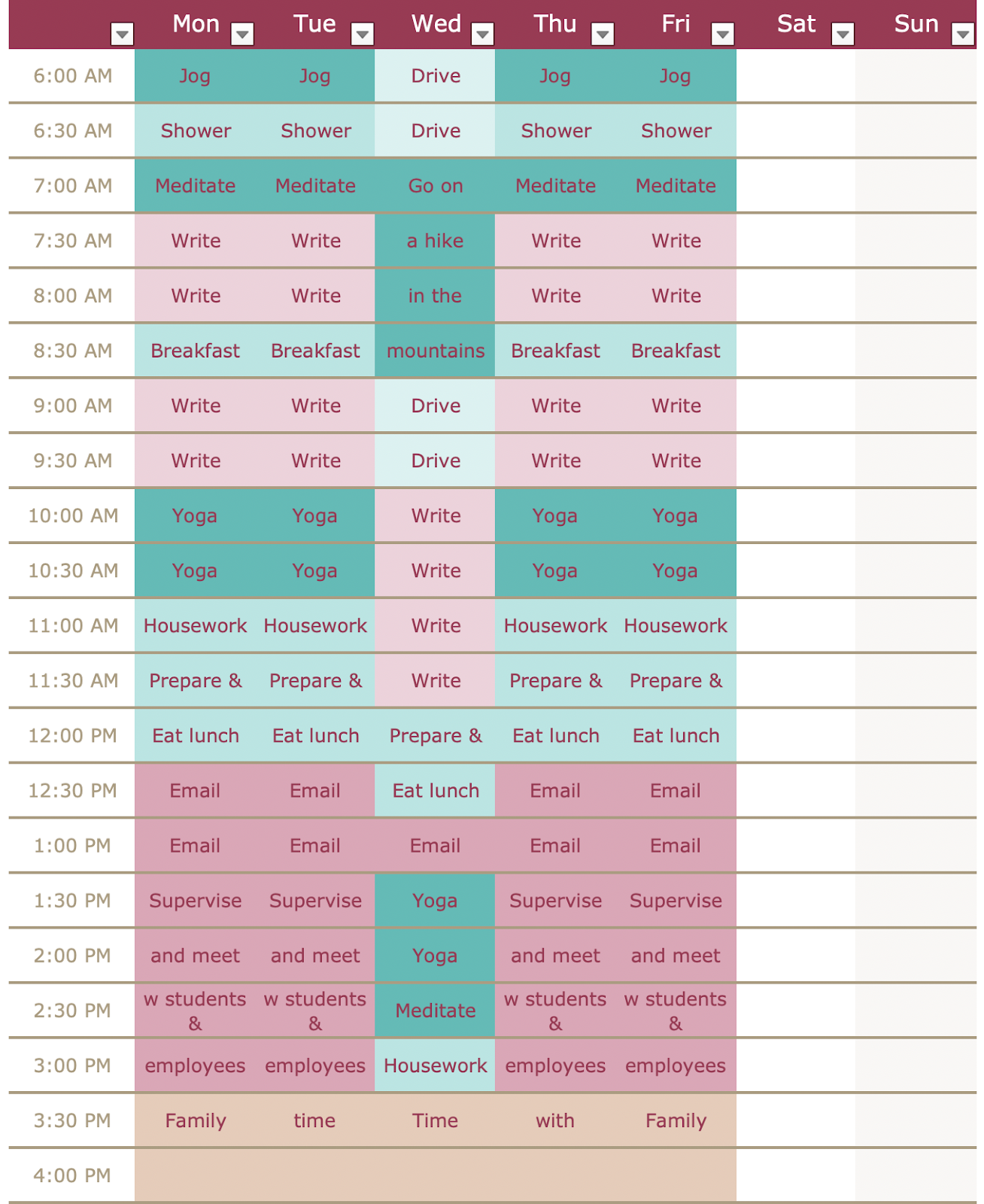 |
| My Summer 2020 weekly template |
Unfortunately, I won’t be able to just write for two hours and call it a day because I have lots of other work to do that is not deep work. Thus, I plan to set aside another two to three hours each weekday to manage the dozen or so employees I have working for me, to respond to emails, and to plan out and troubleshoot my ongoing research.
I also know that exercise and self-care will be very important so I have set aside time in my schedule for those activities.
I show you my summer plan here and will walk you through the logic behind my decisions. I wake up very early. I am an early riser, so this is not difficult for me. Also, as I mentioned above, it gets very hot here in Merced, California. However, the early morning hours are cooler and this is the time I would be able to get in a jog. Thus, I plan to jog for 30 minutes four days a week, first thing in the morning.
I also will meditate just before writing as I find that meditating greatly improves my focus and helps me get into the mindset of doing deep work.
Sitting for two hours is not the best thing for my back, so I will do yoga after meditating to stretch out those kinks. Then, I will take a break to have lunch and do some housework. Then, I will spend 2 to 3 hours taking care of email and meeting with my students and employees before dedicating the rest of the day to hang out with my partner and our three teenage daughters.
And, one day a week I will break up this routine and go on a long morning hike. I chose the morning time because this is the only time it will be cool enough for a long hike.
You will notice that I also set aside time for email and housework. The logic behind doing that is that, knowing that I have those activities on my calendar will make it easier for me to not get lost in email when I should be writing or decide that I really need to dust the ceiling fans during times I have set aside for writing.
How about you? Have you come up with a weekly template for your summer? Will you be able to set up an hour or two of distraction-free time for yourself?